

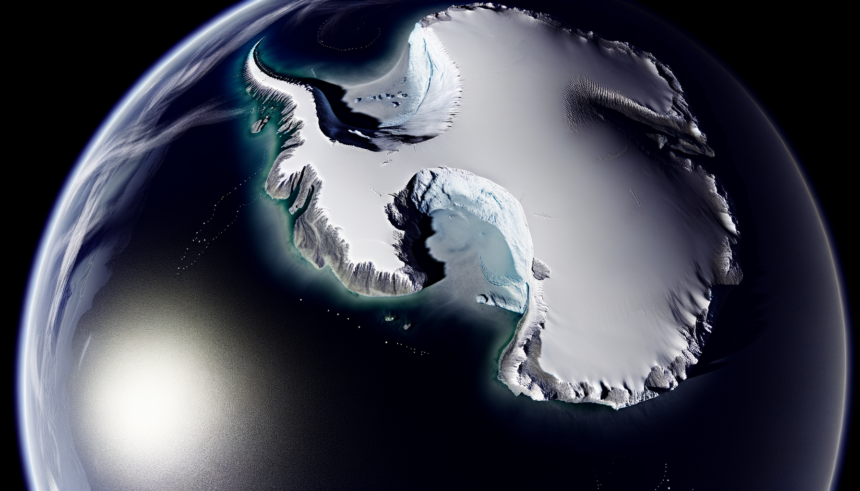
Antarctica’s gravity hole offers a unique glimpse into our planet’s evolving geology. This mysterious phenomenon, a persistent anomaly in Earth’s gravity field, continues to captivate scientists and researchers worldwide, shedding light on the deep processes shaping our planet.
Understanding the Gravity Hole
Located beneath the icy expanse of Antarctica, the gravity hole is not an actual hole but a region where gravity is noticeably weaker. Scientists utilize this area to study the Earth’s mantle, the thick layer of rock between the Earth’s crust and its core, which affects our gravity field.
The Impact on Earth’s Geology
The gravity observations from Antarctica help researchers understand how tectonic processes and geological changes affect Earth’s gravity field. These insights are crucial for broader geological theories that explain the movement of continents and seismic activity.
Comparative Planetary Studies
Studying such unique features on Earth also aids scientists in making comparisons with other celestial bodies, like the moon or Mars, which have their own gravity anomalies. By understanding our own planet’s gravity field, we can better interpret extraterrestrial geology.
Key Takeaways
- Antarctica’s gravity hole provides valuable data on the Earth’s interior.
- It helps scientists understand the impact of geological processes on gravity.
- These studies are vital for comparative planetary research.
Frequently Asked Questions
What is Antarctica's gravity hole?
Antarctica's gravity hole refers to an area over the continent where the Earth's gravity is unusually weak, allowing scientists to study geological processes beneath the Earth's surface.
Why is studying Earth's gravity field important?
Studying Earth's gravity field helps scientists understand the structure and dynamics of Earth's interior, which is crucial for predicting geological events and understanding planetary formation.